
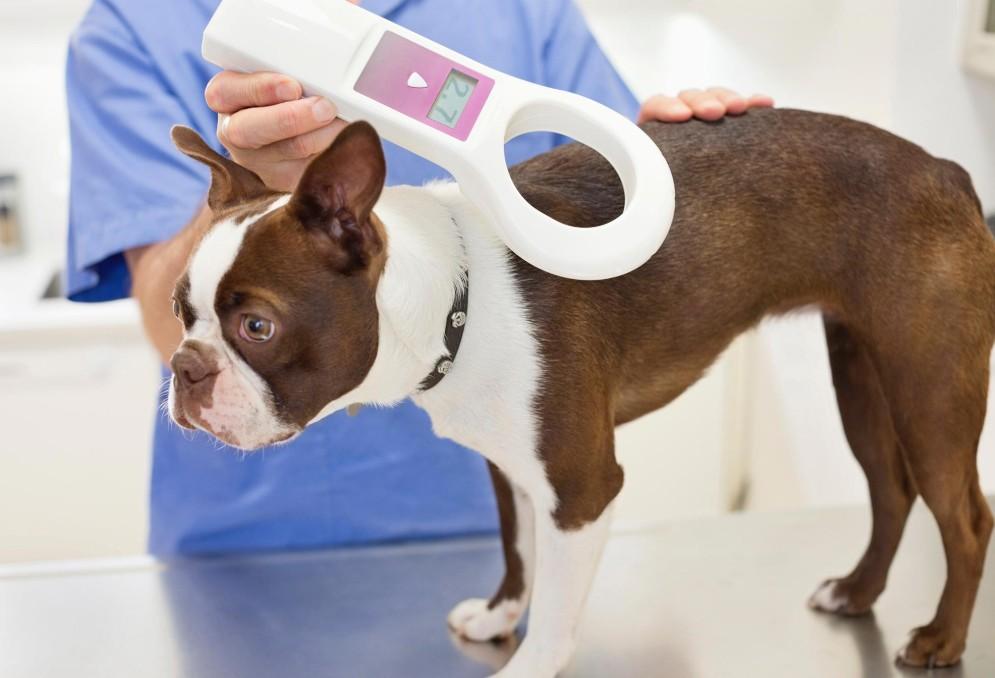
Pet identification has evolved significantly over the past two decades. Traditional pet identification tags and collars still play a role, but modern pet identification technology now relies heavily on permanent electronic identification.
One of the most widely adopted systems in the United States is the pet identification microchip, a tiny RFID-based device used in dog microchipping programs across veterinary clinics and shelters.
This micro chip for dogs stores a unique pet identification number that links an animal to a national animal chip registry. When scanned using a pet microchip scanner, this number allows veterinary professionals or shelters to perform a pet microchip lookup and retrieve owner contact details.
However, every year, millions of pet owners experience the panic of a lost animal.
According to the American Veterinary Medical Association, microchipped dogs are returned to their owners over 52% of the time, compared to just 22% for non-microchipped dogs. This dramatic difference is just physics, biology and data systems working together.
This article explores the complete anatomy of dog microchip systems: from the physical device implanted under your pet's skin to the national pet microchip registration databases that make reunification possible.
A dog microchip represents one of the most elegant applications of RFID (radio-frequency identification) technology in veterinary medicine.
Unlike collars that break or tags that fade, a microchip provides permanent, unalterable identification that remains with your pet for life
But understanding what it actually is helps pet owners make informed decisions about their animal's safety. Because microchips are implanted and invisible, many owners have only a vague understanding of what resides in their pet's subcutaneous tissue.
The technology is worth understanding.
A microchip for dogs is a passive RFID transponder encased in biocompatible glass, approximately the size and shape of a grain of rice, measuring about 12mm long and 2mm in diameter
Despite its diminutive size, this device contains sophisticated components engineered to function for your pet's entire lifetime without batteries or maintenance.
The term "passive" is crucial here: the chip contains no power source. It remains inert until activated by a specific radio frequency from a pet microchip scanner. This design ensures longevity: there's no battery to die, no moving parts to wear out, and nothing to recharge.
The chip contains no battery and no power source of its own . It sits inert beneath the skin, waiting. When a pet microchip scanner passes over it, the scanner emits a low-frequency radio wave that energizes the chip's capacitor.
This power allows the chip to transmit its single piece of stored data: a 9-, 10-, or 15-digit identification number .
That number is not your phone number. It is not your address. It is simply a unique identifier—a license plate, not a driver's license
The silicon microchip stores a unique identification number in read-only memory. This number cannot be changed once programmed during manufacturing .
The tuning capacitor is precisely calibrated to resonate at the scanner's frequency (typically 125 kHz, 128 kHz, or 134.2 kHz, depending on the chip type).
When the scanner's radio waves hit the capacitor, they induce an electrical current enough to power the chip for the fraction of a second needed to transmit its data .
The copper antenna coil acts as the transmitter. When energized, it broadcasts the ID number back to the scanner using backscatter communication—essentially reflecting the scanner's signal with the ID number encoded .
The polymer cap (present in some newer chips) encourages fibroblast activity around the chip, anchoring it in place and reducing the risk of migration .
|
Component |
Function |
|
Biocompatible glass capsule (soda-lime medical glass) |
Encases and protects the internal electronics. The biocompatible glass prevents body rejection and ensures the chip remains safe under the skin after implantation. |
|
RFID microprocessor chip (silicon integrated circuit) |
Stores the unique pet identification number that links the animal to a registry database during a pet microchip lookup |
|
Copper antenna coil |
Receives the electromagnetic signal from a pet microchip scanner and transmits the identification number back to the scanning device. |
|
Tuning capacitor |
Temporarily stores energy received from the scanner signal, allowing the passive RFID chip to activate and transmit data. |
|
Protective polymer coating / cap |
Encourages connective tissue growth around the chip after implantation, helping anchor it in place and prevent movement. |
The Bioglass Capsule: The outer casing is made from a material specifically chosen to prevent immune rejection. Soda-lime glass—similar to laboratory glassware—is hypoallergenic and resists corrosion from bodily fluids
Some premium chips feature a biopolymer coating or anti-migration sheath that helps anchor the chip in place, reducing the small risk of movement after dog microchip implant.
The Antenna: Wrapped around the microchip's core, this copper coil serves dual purposes: it captures electromagnetic energy from the scanner to power the chip, and it transmits the stored ID number back to the reader.
This electromagnetic induction process occurs in milliseconds.
The Silicon Chip: This is the "brain". A tiny microprocessor pre-programmed with a unique, unalterable identification number. Unlike a computer chip, it cannot be rewritten or modified after manufacture. The number is permanent.
The standard dog microchip placement is subcutaneous—just under the skin—between the shoulder blades . This location was selected for several reasons:
For small dogs and puppies, the implantation site remains the same. The chip itself doesn't change size based on the dog's weight—it's the same device for Chihuahuas as for Great Danes
The chip arrives pre-loaded in a sterile, single-use needle and syringe assembly . The dog microchip implantation process takes seconds:
The needle is slightly larger than those used for routine vaccinations, but anesthesia is not required. Most puppies tolerate the procedure with minimal discomfort
A common misconception about pet identification chips is that they store detailed personal data. The microchip itself stores only one piece of information: a unique identification number
That's it. No name, no address, no phone number, no medical history, no ownership details.
You can later login to your microchip registry to find pet details.
But technology alone doesn't reunite families. Registration does.
A microchip without registration is like a phone with no service—it has the hardware but no connection.
The AVMA emphasizes this point clearly: "Without accurate contact information in the database, a lost animal might not be returned to its owner even after its microchip is scanned"
Studies in animal shelters have shown that pets with registered chips are significantly more likely to be reunited with their families compared to those without database records.
Another major limitation of early pet identification systems was fragmentation among registries.
Many microchip numbers existed in separate databases maintained by different providers. If a shelter searched the wrong registry, the owner might never be located.
Industry data has shown that this fragmentation contributed to delayed recovery times for lost pets.
NMR was designed to address this challenge by supporting a centralized national pet microchip registration database.
Through improved microchip lookup infrastructure, NMR enables faster dog chip lookup searches and easier register pet microchip processes for owners across the United States.
Pet owners can also update contact details online, ensuring their pet’s identification remains accurate over time.
Check out more information about the registration process →
National Pet Microchip Registry (NMR) is committed to providing permanent, accessible pet identification services to pet owners nationwide. Our ICAR-certified database ensures your pet's information is secure, searchable, and always available when it matters most.
As a universal registry, we accept all brands. Whether your puppy's chip is HomeAgain, AVID, AKC, 24Petwatch, Datamars, Trovan, or any other manufacturer, you can register it with NMR. One account for all your pets, regardless of chip brand.
Integration with Pet Records: Beyond basic registration, NMR allows you to upload medical records, vaccination history, and other important documents.
This creates a centralized pet profile that follows your animal throughout its life—useful not only for recovery but for routine veterinary care, boarding, and travel.
Register Your Pet Microchip with NMR →
The Right Time: Immediately After Implantation
After implantation, owners should complete dog microchip registration by linking the pet identification number to their contact information.
Choosing a reliable national pet registry for microchip identification ensures that veterinarians and shelters can quickly perform a microchip lookup if the pet is ever found.
If you are new to registration, here are your action steps:
Pet owners can learn more about the process or complete national pet microchip registration through NMR.pet
.