
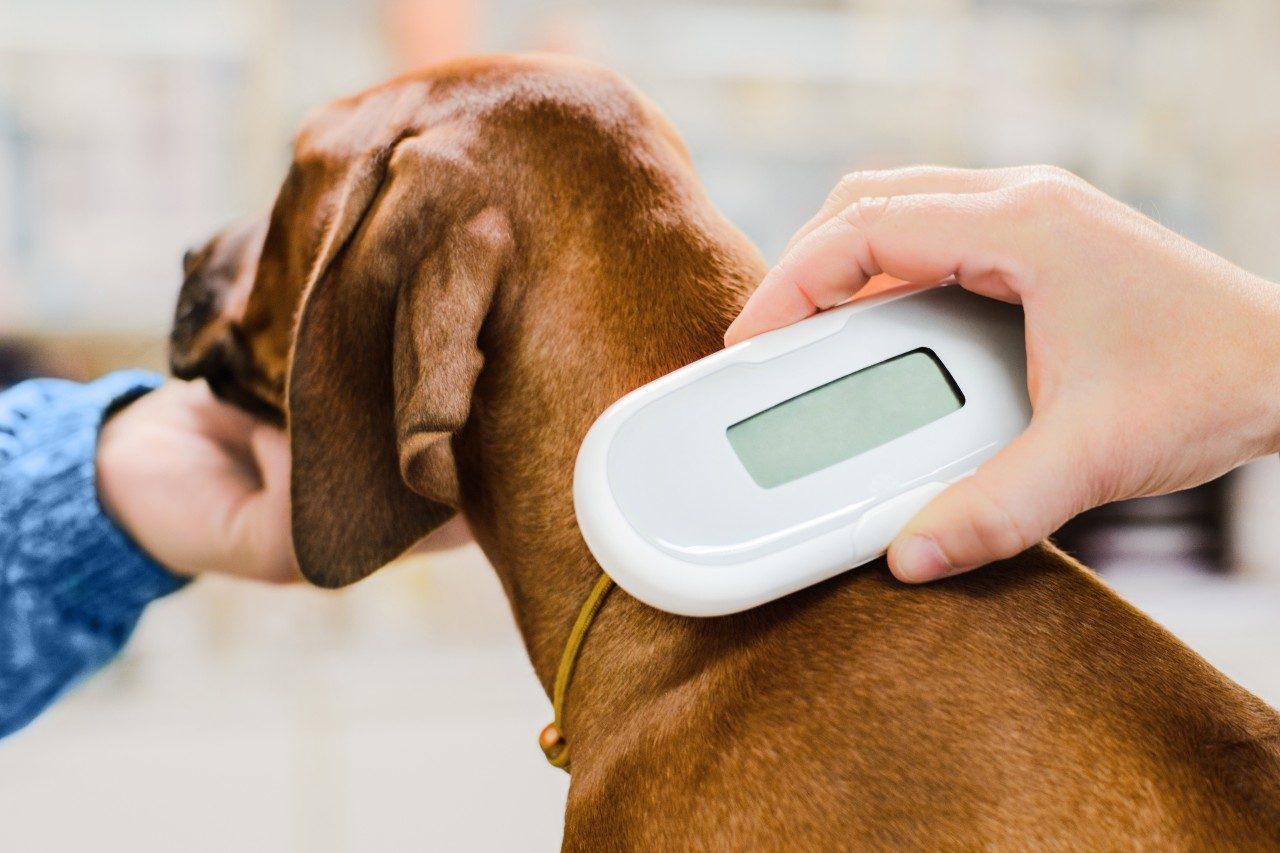
Losing a dog is one of the more distressing events a pet owner can experience and the statistics around it are sobering.
And it's not the chip. It's what happens after.
A microchip changes that number dramatically. Dogs with a registered chip have a return-to-owner rate more than twice the odds.
The procedure takes seconds. The chip lasts a lifetime. And yet, the majority of pet owners either skip it, don't register it or register it once and never update the information.
This guide breaks down exactly what dog microchipping costs in 2026, where to get it done affordably, and just as importantly what happens after the chip goes in.
A dog microchip is a passive RFID device, roughly the size of a grain of rice, implanted under the skin between the shoulder blades. It stores a unique pet ID number. It’s a 15-digit ISO 11784-compliant code that links to your contact information in a pet recovery database.
No battery. No signal. No GPS. The chip is entirely passive.
When a shelter employee, veterinarian, or animal control officer scans a found dog, the dog chip number appears on their reader. They then search that number in a microchip registry to retrieve the owner's name and phone number and make the call that brings a dog home.
That last part is the one most pet owners don't think about until it's too late. The chip is only as useful as the registry record behind it. A chip with no registration, or with an old address from three moves ago, functionally doesn't exist.
The dog microchip price varies by where you go, not by the breed or size of your dog. Puppies cost the same as adults. Large breeds cost the same as small ones. The procedure is identical regardless.
According to a market study conducted across all 50 states, the national average microchip cost at a full-service vet is approximately $48.
That covers implantation only. Registration with a national pet microchip database is almost always a separate expense and one that often goes unmentioned at the time of the procedure.
The takeaway: your total dog microchip cost has two parts. Most people only pay for the first one.
Searching for dog microchip near me is the right instinct, but knowing how to filter your options saves money. These five approaches consistently lower the total cost:
Register your dog's chip at NMR →
This is where most pet owners get caught. When you pay a vet or clinic for dog microchipping, the fee typically covers:
What the vet fee almost never includes:
This gap is why microchipped dogs still don't come home. The chip is there. The scan works. But the registry record is incomplete, outdated, or missing entirely.
The National Microchip Registry (NMR) was built to close exactly that gap. After your dog is chipped anywhere at a vet, a shelter, or a community clinic
NMR handles the registration side: a permanent, searchable record linked to your current contact information, available to any shelter or clinic that scans your dog.
Registration is not optional. It is the mechanism that makes the chip functional.
A study published in the Journal of the American Veterinary Medical Association found that when microchipped dogs were not returned to their owners after being found, the failure came down to three consistent causes:
These are not rare failures. They are the most common outcomes for unregistered or poorly maintained chip records. Across all lost dogs entering U.S. shelters, the return rate without a chip is approximately 22%. With a registered chip, it exceeds 52% more than double.
When choosing where to register, these are the criteria that matter:
National Microchip Registry offers four registration plans, each designed for different levels of pet protection. All are one-time payments with no recurring fees:
|
Plan |
Price |
Best For |
|
Basic Registry |
$39 (one-time) |
Core chip registration + searchable national record |
|
Health Vault Registry |
$50 (one-time) |
Registry + digital health record storage |
|
Instant Recovery Kit |
$99 (one-time) |
Registry + QR ID tag for instant street-level identification |
|
Total Protection Kit ⭐ Best Value |
$115 (one-time) |
Registry + QR tag + health records → full identification system |
The Basic Registry at $39 is the entry point and covers what the chip implantation does not: a permanent, nationally searchable record tied to your contact information.
The Total Protection Kit layers in a scannable QR tag so if your dog is found by a neighbor who doesn't have a shelter scanner, they can still pull up your information from any smartphone.
If your dog came from a shelter, breeder, or previous owner, a chip number likely already exists but may not be linked to your information. This is one of the most common and easily overlooked ownership gaps.
Here's how to verify in three steps:
Step 1: Locate the chip number. Check adoption paperwork, vet records, or ask your veterinarian to scan your dog at the next visit. The microchip number is typically a 9, 10, or 15-digit string printed on your registration paperwork.
Step 2: Run a microchip number lookup. Use the AAHA Universal Pet Microchip Lookup or the NMR dog microchip lookup tool. Enter the number to see which registry currently holds the record and whose contact information it shows.
Step 3: Register or transfer ownership. If your name and current phone number are not the listed contact, register the chip now. It takes a few minutes and costs less than a single vet visit.
This step is especially important after adoption, rehoming, or any change of address. For ownership transfer procedure visit →
Once your dog is chipped and registered, you should be able to generate a microchip certificate, a document that records:
This matters beyond lost-pet scenarios. Proof of microchip registration is increasingly required for international travel, certain rental housing, and breed-specific regulations in some municipalities.
Some registries also provide documentation that functions as a formal pet record referred to informally as a dog birth certificate or puppy birth certificate.
While no legal equivalent exists in the U.S., this type of documentation is useful for breeders, new puppy owners, and anyone who wants a verified ownership record on file.
NMR offers registry certificates that include your dog's identifying information, chip number, and registered owner details accessible and downloadable from your account.
If you've been looking for a dog birth certificate online or a way to document your puppy's registration formally, NMR covers that as part of the registration process.
Direct answer: yes, and the data is consistent on this.
The procedure takes under a minute. It costs between $25 and $87 depending on the provider. The chip lasts the dog's entire life with zero maintenance.
Against that: 1 in 3 dogs will go missing at some point. Without a chip, roughly 22% come home from shelters. With a registered chip, that number more than doubles to 52%.
A collar and ID tag still matter; they're faster if a neighbor finds your dog on the street. But tags fall off. Collars get cut or removed. The chip is the only permanent, tamper-proof identification your dog carries for life.
The one condition: the chip must be registered with accurate, current contact information. An unregistered chip is the equivalent of a locked door with no key.
Most chips implanted in the U.S. today follow the ISO 11784/11785 standard, a code readable by universal scanners used at virtually all U.S. shelters and clinics.
Older 9- and 10-digit chips predate the ISO standard. Most modern universal scanners can still read them, but it's worth confirming compatibility at your vet if your dog has an older chip.
The main brands you'll encounter:
Brand does not meaningfully affect performance. What matters is the registry, not the chip manufacturer.
You are not required to register with the manufacturer's own database and independent registries like NMR often offer better national lookup coverage and longer-term reliability than manufacturer-tied systems.
Use the NMR to report lost or found dog →
Q: How much does it cost to microchip a dog at PetSmart?
PetSmart offers microchipping through Banfield's veterinary services, typically ranging from $25 to $50 depending on location and implantation plan. Registration with a national pet recovery database is a separate step you'll need to complete afterward.
Q: Can I microchip my dog myself?
No. Microchip implantation must be performed by a licensed veterinarian or trained veterinary technician.
Q: How much does it cost to have a chip put in a dog?
Implantation costs range from $10–$20 at a municipal shelter to $45–$87 at a full-service veterinary clinic. And registry enrollment starts at $39 for a permanent record at NMR.
Q: Is microchipping a dog worth it?
Yes. Microchipped dogs are more than twice as likely to be returned after going missing compared to unchipped dogs. The procedure is fast, permanent, and low-cost relative to the alternative.
Q: How long does a microchip last in a dog?
A properly implanted chip is designed to last the lifetime of the dog 10 to 15 years or more with no maintenance, no battery, and no replacement required.
Q: Is it free to get your dog chipped?
Municipal shelters, nonprofit organizations, and community microchip events occasionally offer the procedure at no cost.
Dogs adopted from shelters are almost already microchipped as part of their adoption fee. Outside of those scenarios, expect to pay $10–$50 for implantation depending on the provider.
Now you know microchip implantation is step one. Registration is what makes it count.
If your dog's chip isn't registered or if your contact information on file is outdated the chip offers no practical protection. It's a number attached to nothing.
National Microchip Registry (NMR) offers permanent registration. Plans scale up to include QR recovery tags and digital health records for owners who want a complete identification system.
.