
Every year, thousands of pets go missing in the United States — and many never make it back home. Collars break, tags fall off, and even the most careful owners can’t prevent every accident. That’s where dog microchipping comes in.
Unlike temporary solutions, microchipping dogs provides a permanent way to identify your pet. A tiny chip, no bigger than a grain of rice, becomes your dog’s lifelong ID.
Once you register your pet microchip in a trusted database, shelters and veterinarians can instantly connect a lost dog back to its family.
Think of dog microchip registration as your pet’s invisible safety net — one that works 24/7, without batteries, apps, or Wi‑Fi. It’s simple, affordable, and proven to save lives.
A dog microchip is a tiny electronic device — about the size of a grain of rice — that’s implanted just under your dog’s skin.
This chip contains a unique identification number linked to a national pet microchip registration database. When scanned by a vet or shelter, the number connects directly to your contact information.
Unlike collars or tags, which can be lost or removed, microchipping dogs provides a permanent pet ID chip that lasts for life. Once you register your pet microchip, your dog is part of a secure pets database that helps reunite families with their pets faster.
???? At the National Microchip Registry (NMR), we believe every dog deserves this protection. Our mission is to make microchipping accessible, reliable, and easy for pet parents across the U.S.
|
Feature |
Details |
|
Size |
Grain of rice |
|
Placement |
Under the skin, between shoulder blades |
|
Technology |
Passive RFID |
|
Lifespan |
20+ years |
|
Purpose |
Identification, not GPS tracking |
Already have a chip? Check your dog microchip registration lookup with the NMR to ensure your details are up to date.
The process of microchipping dog is straightforward and designed to be safe for pets.
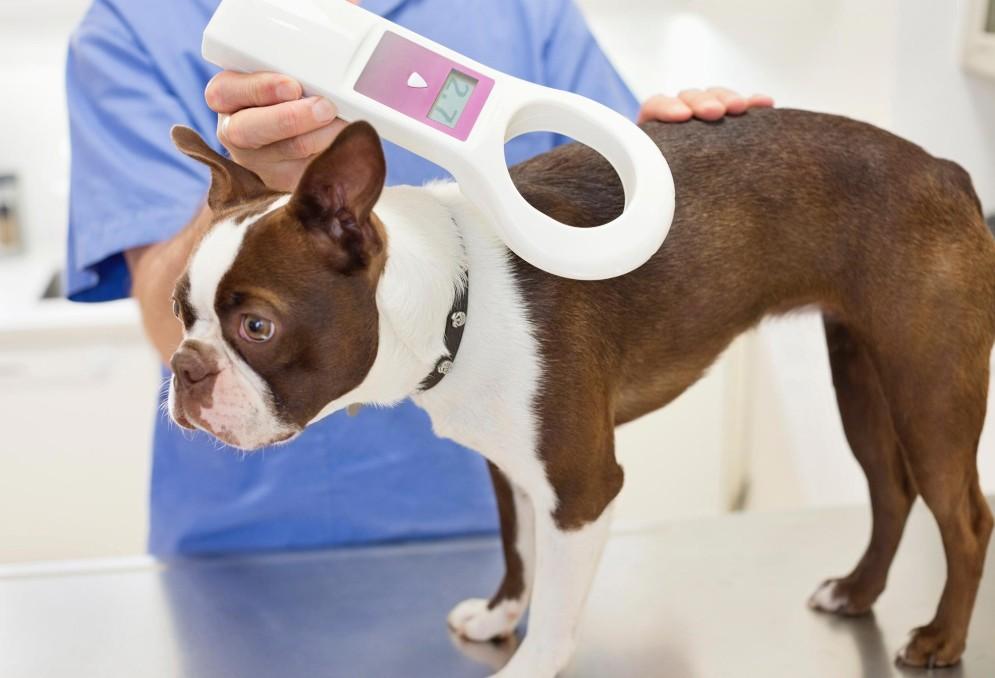
A veterinarian or trained professional uses a sterile syringe to implant the chip just under the skin, usually between the shoulder blades. The procedure is quick, similar to a routine vaccination, and most dogs barely notice it.
Once implanted, the chip remains in place for life. Each chip carries a unique identification number that is linked to a dog microchip database.
When you register your pet microchip, your contact details are securely stored in the system. If your dog is ever lost, shelters and veterinary clinics can scan the chip to access the ID number and connect it to your information.
|
Step |
Description |
|
Implantation |
Quick injection under the skin |
|
Registration |
Enter owner details in database |
|
Lookup |
Scanner reads chip ID |
|
Recovery |
Owner contacted through registry |
This process highlights why microchipping is considered one of the most reliable ways to protect pets. It requires no maintenance, works across standard scanners, and ensures that your dog always has a permanent identity.
The advantages go far beyond simple identification. Once you register your pet microchip online in a trusted national pet database, your dog has a permanent safety net that works anywhere in the country.
By choosing dog microchipping near me, you’re complying with the best practices!
Give your dog a permanent identity that ensures they can always find their way back home.
One of the most common questions pet owners ask is whether a dog microchip can track their pet’s location.
The answer is no → microchips are not GPS devices. Instead, they serve as a permanent identification tool that links your dog to a national pet microchip registration.
When comparing these options, microchipping dogs stands out as the most reliable and cost‑effective solution for permanent identification.
While GPS trackers are useful for monitoring daily activity, they cannot replace the security of a pet ID chip that ensures your dog is always connected to an animal chip registry.
By combining a microchip with other tools like collars or GPS, pet owners create a layered safety system but the foundation should always be a registered microchip.
|
Registry |
Features |
Recognition |
Ease of Registration |
|
National Microchip Registry (NMR) |
Secure national pet microchip registration, easy updates, lookup tools |
Growing recognition among breeders, shelters, and families |
Simple online process, quick owner updates |
|
Lost pet alerts, 24/7 recovery service |
Widely recognized by vets and shelters |
Online registration, annual membership options |
|
|
PetLink |
International database, multilingual support |
Recognized across Europe and North America |
Online registration, accessible globally |
|
Backed by American Kennel Club, disaster recovery support |
Strong recognition in U.S. dog community |
Easy registration, linked to AKC membership |
|
|
Datamars Pet ID |
ISO‑compliant chips, global registry |
Recognized in EU travel regulations |
Registration through vets and online portals |
|
Trovan |
RFID technology provider, industrial + animal ID |
Known in RFID technology sector |
Registration varies by distributor |
Once your dog has been microchipped, the process isn’t complete until you take a few important steps. Proper follow‑through ensures that the chip works as intended and that your pet is always connected to a secure national pet microchip registration.
By following this checklist, you make sure that microchipping dogs provides the full protection it’s designed for. A chip is only effective when it’s registered, updated, and verified in a trusted pet registry.
When it comes to dog microchipping, choosing the right registry is just as important as the implantation itself. A chip without proper registration is only a number — it cannot connect your dog back to you.
That’s why the NMR exists: to provide pet owners across the U.S. with a secure, reliable, and easy‑to‑use system for national pet microchip registration.
By registering with NMR, you ensure that your dog’s pet chip is more than just technology, it becomes a lifeline that connects your pet to you, no matter where they are found.
Dog microchipping is more than just a modern convenience — it’s a permanent safeguard for your pet’s identity. Unlike collars or GPS trackers, a pet ID ensures that your dog is always connected to a secure national pet microchip registration.
Once you register your pet microchip online, your details are stored in a trusted registry, making reunification faster and more reliable if your dog is ever lost.
For new puppy owners, microchipping is one of the most important steps in responsible pet care. It provides peace of mind, protects against the unexpected, and builds a lifelong safety net.
With services like the National Microchip Registry (NMR), families across the U.S. can access the best pet microchip registry — one that makes registration simple, updates easy, and lookups fast.
In the end, microchipping is about love, responsibility, and ensuring that your puppy always has a way home.
By choosing to microchip and register your dog, you’re giving them the gift of security and yourself the comfort of knowing they’ll never be without a permanent identity.
.